Chair Yoga for a Sore Back: A 10-Minute Seated Routine
Getting down to the floor — and back up — is the hidden toll of most back-care routines. If your back is sore, or your knees complain, or you are simply at work in work clothes, the floor is often the exact reason the stretches never happen.
Chair yoga removes that barrier entirely. This guide explains why a sturdy chair is a genuinely good place for a sore back to move, then walks you through a ten-minute seated routine of five gentle moves — no mat, no kneeling, nothing to change into.
Is chair yoga really yoga?
It keeps everything that matters. The slow pace, the breath leading the movement, the comfortable ranges held long enough for the body to trust them — all of that survives the move from mat to chair intact. What gets left behind is the part a sore back rarely misses: kneeling on hard floors, weight on the wrists, and the small acrobatics of standing back up.
There is a quieter benefit too. A sore back tends to make people brace and move less, which usually makes the next week harder, not easier. Ten unhurried minutes of seated movement is a low-stakes way to remind your back — and the nervous system keeping watch over it — that motion is safe, and that reminder may help more than any single stretch does.
And no, moving in a chair is not the same as sitting in one. The slump that bothers backs is held stillness; chair yoga is the opposite — deliberate, varied movement that happens to borrow the furniture.
The 10-minute seated routine
Pick a sturdy chair without wheels, sit toward the front edge with both feet flat, and move at half the speed you think you should. Every range stays comfortable — mild stretch, easy breath, nothing sharp.
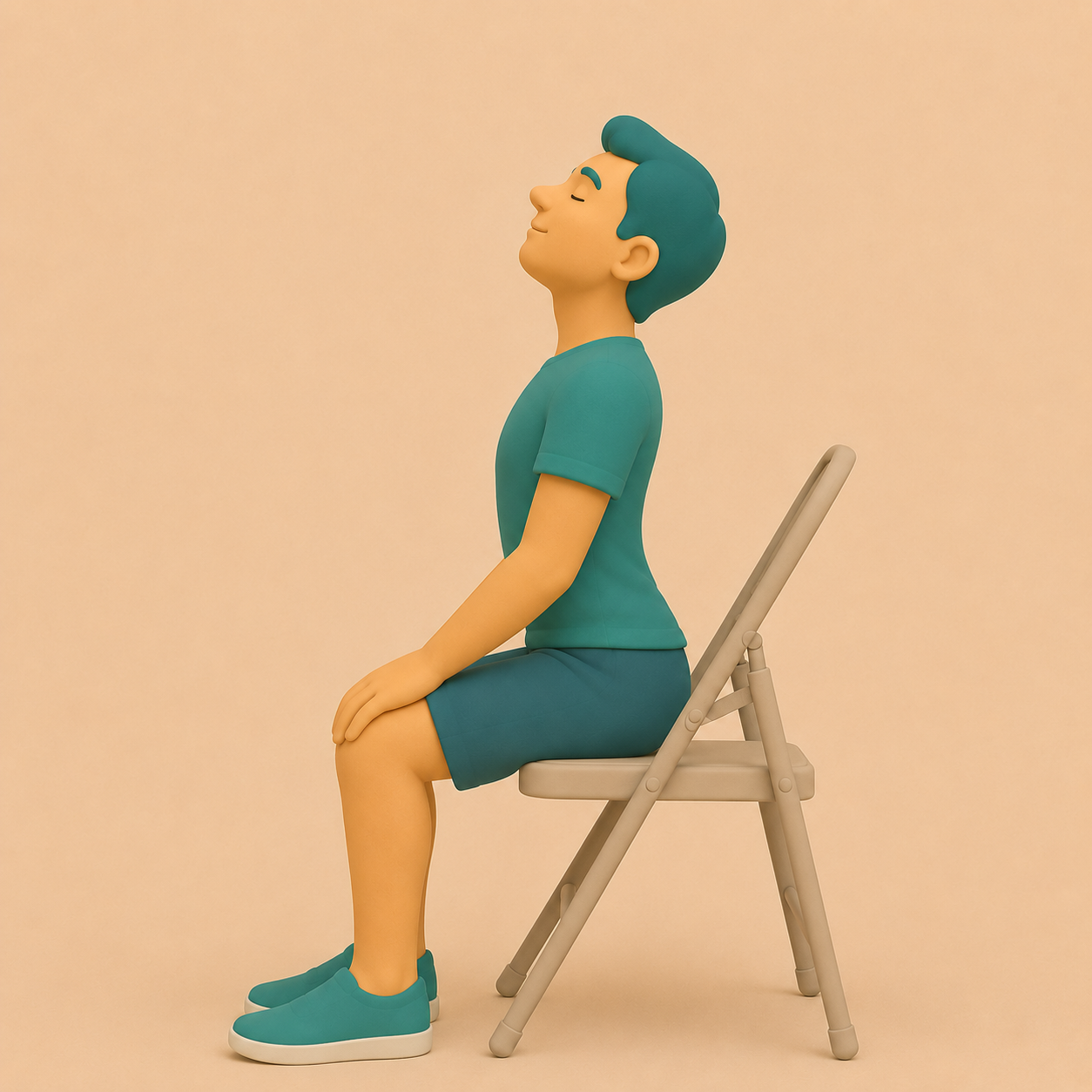 Seated Cat-Cow — 8 to 10 slow breath cycles. The full spinal wave without kneeling: chest lifts on the inhale, spine rounds on the exhale. Let the breath set the pace.
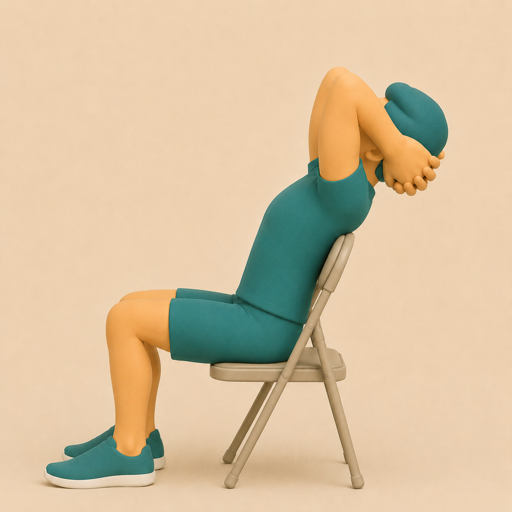 Thoracic extension over the chair back — 5 to 8 gentle arcs. Drape your upper back over the backrest (pad the edge with a folded towel) to reverse the screen hunch right where it forms.
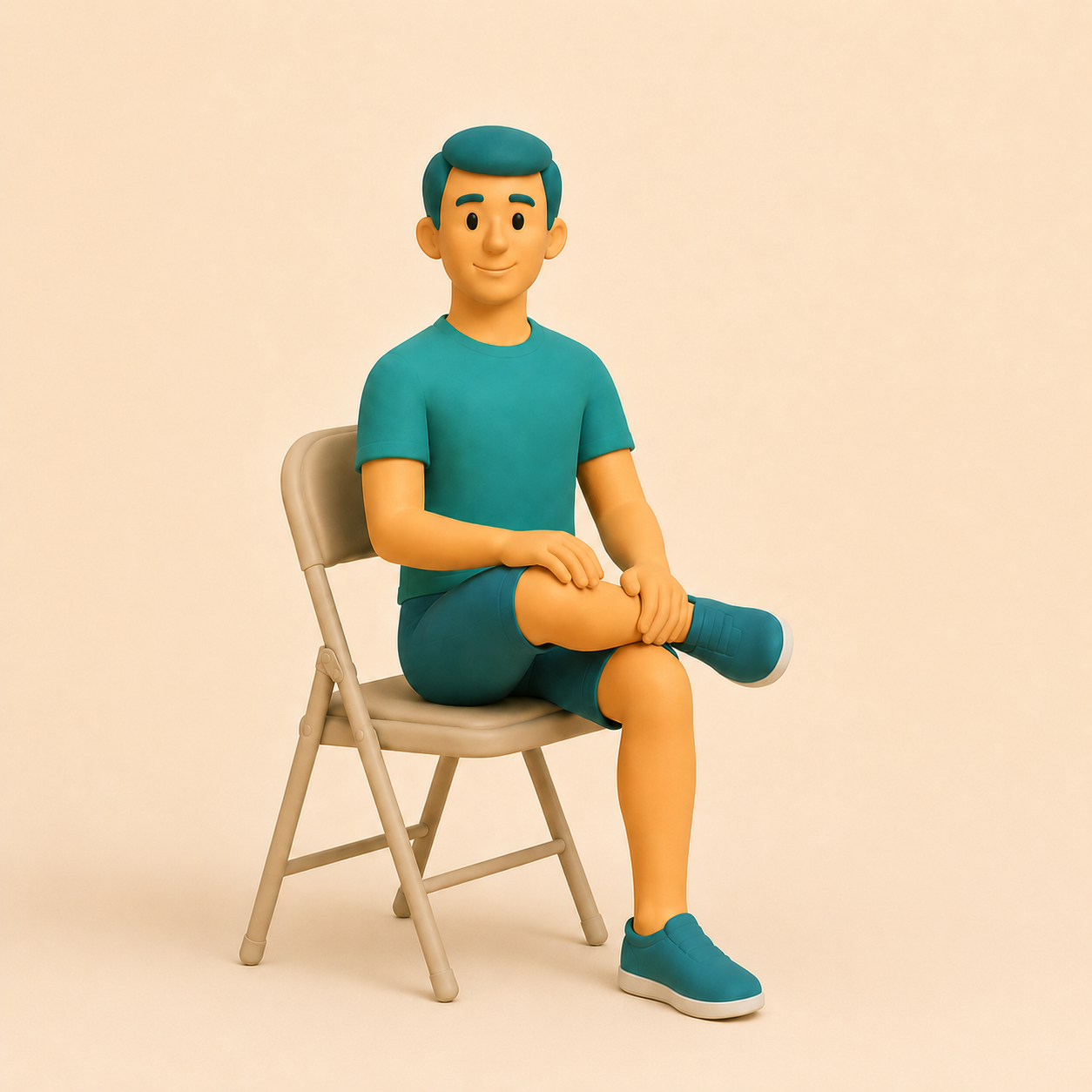 Seated figure-four — 30 seconds per side, crossed foot flexed. Reaches the deep hip muscles that long sitting squeezes; lower backs often thank the hips for this one.
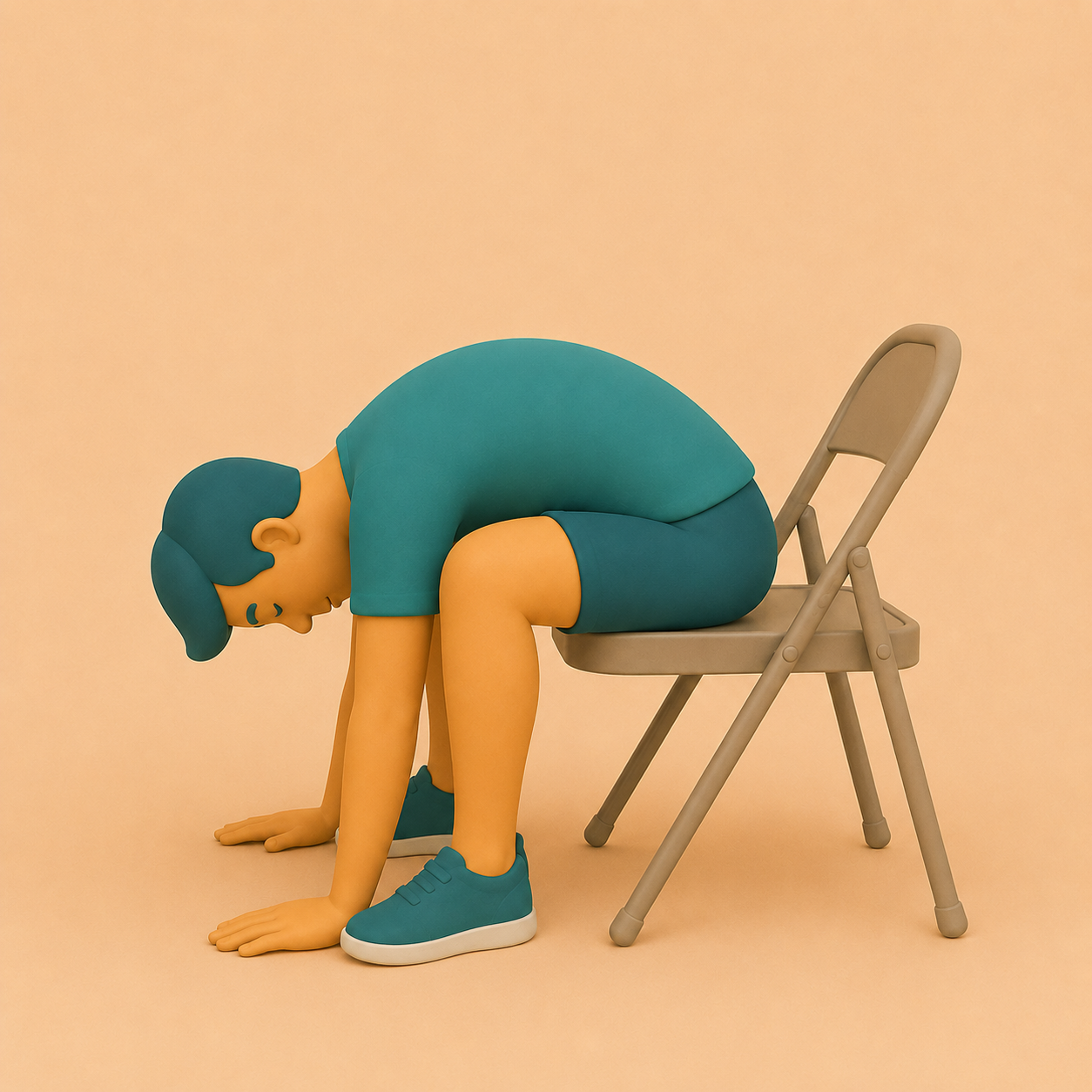 Seated forward fold — 4 to 6 slow breaths. Fold over your thighs, let the head hang heavy, and roll back up one breath at a time.
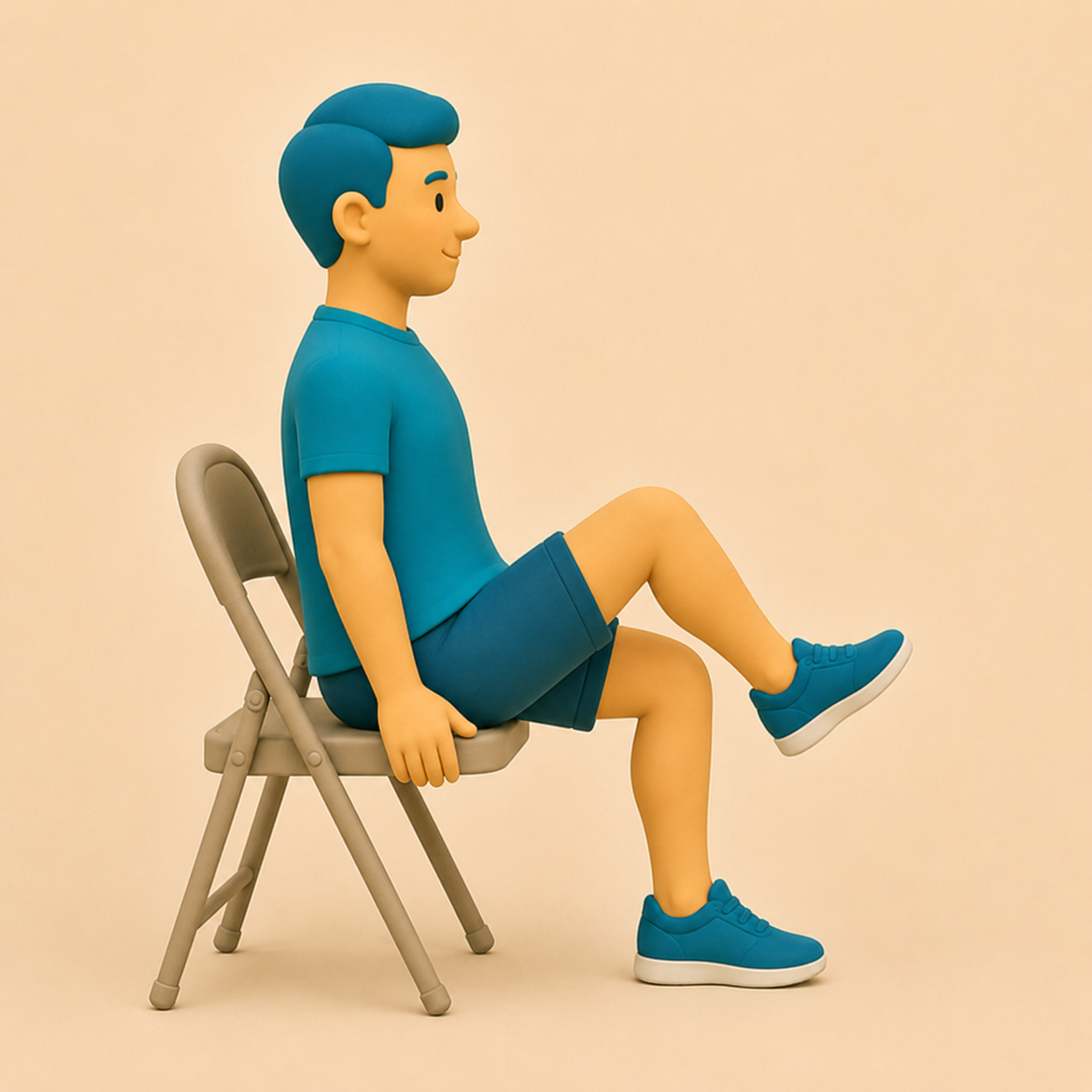 Seated hip march — 8 to 10 lifts per side. A quiet strength finisher that wakes the hip flexors and deep core without the back noticing the effort.
Making it work in a real day
Keep the effort honest: this should feel like easing things open, not exercising. If a move has you clenching your jaw or holding your breath, shrink the range until the breath comes back — with a sore back, the gentle version done calmly beats the deep version done braced.
Timing matters more than duration. The routine earns its keep mid-morning and mid-afternoon, once sitting has had a few hours to accumulate — a recurring reminder feels a little silly for the first two days and then quietly becomes the most reliable back care you do.
And let consistency carry it. Ten seated minutes most days does more for a sore back than one long session on the weekend, because a back learns through repetition — same chair, same order, most days.
The chair is a doorway, not a ceiling
Chair yoga is a kind starting point, and for sore, busy, or floor-averse weeks it can be the whole practice. Over the longer run, though, backs do best when they also get gradually stronger — a little more capacity each week is what changes how next month feels.
If you want that progression handled for you, the 60-second check-in on backpain.ai builds a daily ten-minute plan around your specific back — where it hurts, what makes it worse, what you want to get back to — and then guides you through one short session a day, with the first session free.
When a sore back deserves a professional
See a healthcare professional promptly if back pain comes with numbness or tingling, pain running down a leg, fever, unexplained weight loss, or follows a fall or injury — and likewise if it keeps worsening over weeks or reliably wakes you at night. Those patterns deserve real medical eyes, not a seated routine.
This guide is educational information, not medical advice. When in doubt, check with your doctor before starting any exercise program.
Reading helps — a plan does the deciding for you: which moves, in what order, for your back.
Start my 60-second check-inFirst session free · no card needed
More for your lower back: all guides and gentle moves in one place →
Educational information, not medical advice — consult a licensed healthcare provider, and check with your doctor before starting any exercise program.