A Gentle Morning Routine for a Stiff Lower Back
If your back feels like a rusty gate for the first hour of every day, you are in very normal company. Morning stiffness is one of the most common back complaints there is — and one of the most responsive to a few minutes of gentle movement.
This guide explains why mornings are the hardest time for many backs, then walks you through a short routine you can do beside your bed, before coffee, in about eight minutes.
Why is my back so stiff in the morning?
Overnight, the discs between your vertebrae slowly absorb fluid — they are actually at their plumpest first thing in the morning. That extra height makes the surrounding muscles and ligaments feel tight, and bending feels harder than it will an hour later.
Add six to eight hours of lying still — often in one or two positions — and the muscles along your spine simply have not moved through their range in a long time. Stiffness after stillness is your body being cautious, not broken.
That is also why the answer is rarely to stretch hard first thing. Early-morning backs respond best to small, slow, repeated movement — waking the range up rather than forcing it.
The 8-minute wake-up routine
Four gentle moves, in an order that starts smallest and builds. Move slowly, breathe through each one, and keep every range comfortable — this should feel like easing a door open, not pushing it.
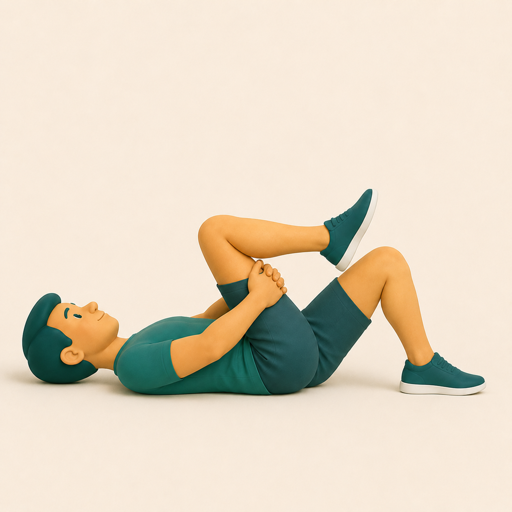 Single knee to chest — 30 seconds per side. Still lying in bed if you like. A gentle hug of one knee that eases the lower back long before you are upright.
 Pelvic tilts — 10 slow reps. Small rocking of the pelvis that warms the deepest layer of the lower back with almost no effort.
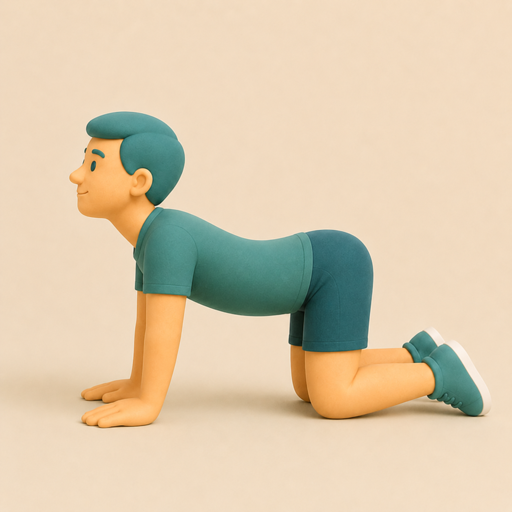 Cat-Cow — 10 slow breath cycles. The classic wave through the whole spine; let the breath set the pace.
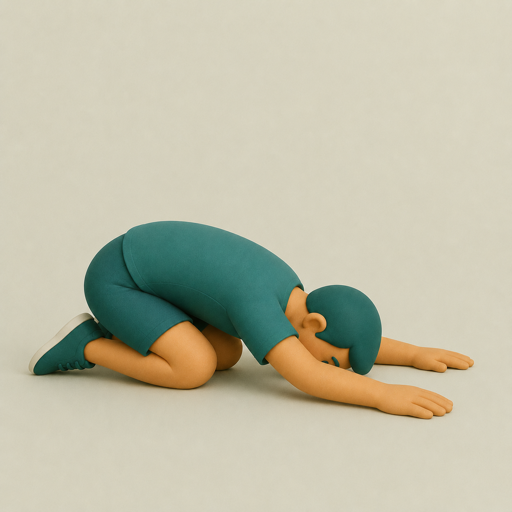 Child's Pose — 30 to 60 seconds. A resting fold to finish, letting the lower back lengthen while you breathe into your back ribs.
Making it stick
Consistency beats intensity for morning stiffness. Doing this small routine most mornings tends to do more than a long stretching session once a week — the back learns the pattern through repetition.
Give it two weeks before you judge it. Many people notice the first hour of the day feeling different within days, but the steadier change builds over weeks of showing up.
If you want the guesswork removed, a 60-second check-in on backpain.ai builds a plan around your specific back — where it hurts, what makes it worse, and what you want to get back to — and then guides you through one short session a day.
When morning stiffness deserves a professional
See a healthcare professional promptly if stiffness comes with numbness or tingling, pain running down a leg, fever, unexplained weight loss, or if it followed an injury. The same goes for stiffness that lasts well past the first hour, keeps worsening over weeks, or wakes you at night — those patterns deserve real medical eyes, not a routine from the internet.
This guide is educational information, not medical advice. When in doubt, check with your doctor before starting any exercise program.
Reading helps — a plan does the deciding for you: which moves, in what order, for your back.
Start my 60-second check-inFirst session free · no card needed
More for your lower back: all guides and gentle moves in one place →
Educational information, not medical advice — consult a licensed healthcare provider, and check with your doctor before starting any exercise program.