Gentle Stretches Before Bed for a Sore Back
A sore back collects the whole day — the commute, the desk, the carrying, the hurrying — and then gets asked to lie still for eight hours. No wonder so many backs go to bed tense and wake up complaining. The few minutes before you turn the light off are a small window with an outsized effect on both halves of that story.
This guide walks you through a short, genuinely gentle stretching routine built for that window: five moves at a drowsy pace, most of them lying down, that may help your back release the day before the long stillness of the night.
Why stretch before bed at all?
Two things happen by evening that make this hour worth a little care. The first is mechanical: hours of sitting, standing, and bracing leave the muscles along the spine mildly shortened and guarded. Taking the back slowly through a comfortable range is a message that the guarding can stand down — nothing dramatic, just a quiet all-clear.
The second is about the nervous system. Pain and sleep talk to each other in both directions: a rough night tends to turn up the volume on the next day's soreness, and a body that goes to bed wound up sleeps lighter. Slow movement paired with slow breathing is one of the most dependable ways to nudge yourself toward rest — which is why the pace of this routine matters as much as the moves in it.
None of it requires flexibility, athletic effort, or working up a sweat. In fact, if a stretch before bed leaves you feeling more awake, it was too intense. Everything below is deliberately mild.
The 10-minute wind-down routine
Do these in order, in warm clothes, with the lights already low. The first two happen on the floor or a rug; the last three work just as well on your bed. Move at half the speed you think you should, and keep every range comfortable — drowsy is the goal here, not deep.
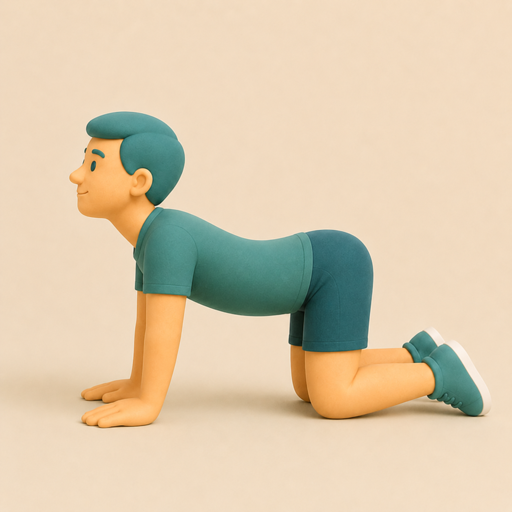 Cat-Cow — 8 slow breath cycles. A quiet wave through the whole spine to undo the day's stillness. Let the breath set the pace and keep the range small.
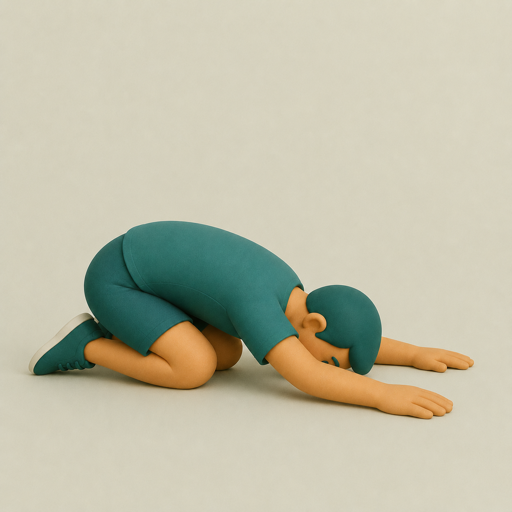 Child's Pose — 45 to 60 seconds. A resting fold that lengthens the lower back while you breathe into your back ribs. If kneeling bothers you tonight, skip straight to the bed.
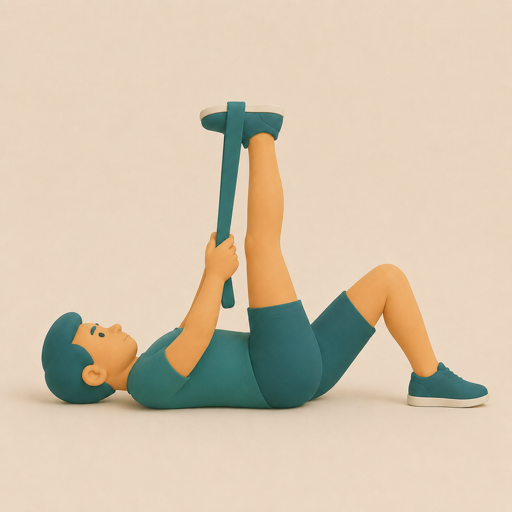 Supine hamstring stretch — 30 seconds per side, with a towel or strap around the foot. The hamstrings tug on the pelvis all day; easing them lets the lower back settle flatter into the mattress.
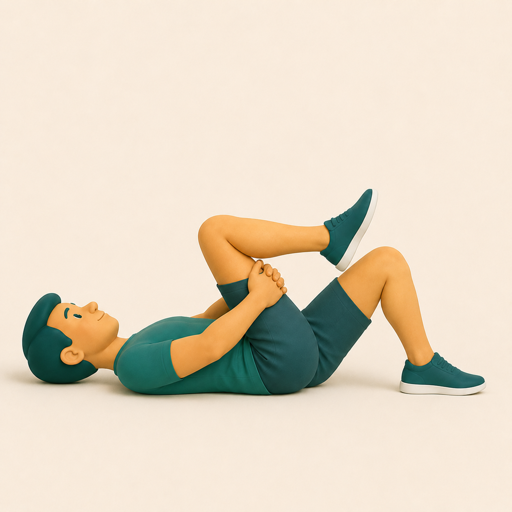 Single knee to chest — 30 seconds per side. A soft hug of one knee at a time that releases the lower back without asking anything of it.
 Supine twist — 45 seconds per side, knees dropping lazily together. The classic last move of the day: shoulders heavy, breath slow, the spine unwinding under its own weight.
Keep it drowsy: the rules that make it work
The biggest mistake with bedtime stretching is approaching it like exercise. No pushing into a satisfyingly deep stretch, no counting reps out loud, no bright screen running a timer. Long easy holds and slow nasal breathing do more for a sore back at ten p.m. than any amount of effort — the stretch is the vehicle, and calm is the cargo.
Make the exhale slightly longer than the inhale — a four-count in and a six-count out is plenty — and let each breath out be the moment a stretch settles a little further, if it wants to. If any position takes effort to hold, prop it instead: a pillow under the knees in the twist, a cushion between hips and heels in Child's Pose.
And keep it short. Ten minutes most nights beats forty minutes twice a week, because a wind-down works partly by becoming a signal — and signals are built by repetition. Same order, same dim light, most evenings: within a couple of weeks the routine itself starts telling your body that sleep is next.
Setting up the night that follows
The routine hands you over to the night, and the night has its own levers. Side sleeping with a pillow between the knees is the most reliable arrangement for a sore back; back sleepers usually do better with a pillow under the knees. Getting into a kind position while you are still loose from the stretches is the easiest moment to build the habit — How to Sleep With a Sore Back walks through the full picture, pillows and all.
Evenings are also only half the equation. The steadier change comes from a back that grows a little stronger and more mobile week by week — that is daytime work. If you want it mapped out for you, the 60-second check-in builds a daily ten-minute plan around your specific back, guided step by step, with the first session free.
When night-time back pain deserves a professional
A gentle wind-down suits most ordinary aching backs, but some patterns need real medical eyes first. See a healthcare professional promptly if back pain reliably wakes you in the second half of the night, comes with numbness or tingling, runs down a leg, followed an injury, or arrives alongside fever or unexplained weight loss — and likewise if it keeps worsening over weeks despite sensible care. The NHS back pain guidance lists the same warning signs.
This guide is educational information, not medical advice. When in doubt, check with your doctor before starting any exercise program.
Reading helps — a plan does the deciding for you: which moves, in what order, for your back.
Start my 60-second check-inFirst session free · no card needed
More for your lower back: all guides and gentle moves in one place →
Educational information, not medical advice — consult a licensed healthcare provider, and check with your doctor before starting any exercise program.