Core Moves That Are Safe When Your Back Hurts
“Strengthen your core” may be the most common advice a sore back ever receives — and the least acted on. When your back already hurts, exercises aimed straight at your midsection can sound like a dare, so the advice gets filed under later, and later keeps moving.
This guide is about closing that gap. It explains what your core actually does for your back, what separates a back-friendly core move from the ones worth postponing, and then walks you through five moves gentle enough to begin while your back is still complaining.
What your core actually does for your back
The word core conjures six-packs, but the muscles that matter most to your back are ones you cannot see: a deep corset of abdominal, back, and pelvic muscles that wraps the trunk and steadies the spine while your arms and legs do the day's work. When that corset is doing its job, everyday load — carrying groceries, standing up from a chair, sitting through a long meeting — spreads across more muscle and lands less on any one sore spot.
That is why gentle strengthening keeps earning its place in back care. For common, non-specific back pain, staying active and gradually building strength is among the best-supported self-care there is — MedlinePlus's back pain overview puts exercise near the top of its list. The catch is simply that the classic ab workout is not where a sore back should start.
What makes a core move back-friendly
Sit-ups and crunches build the abs by folding the spine, over and over. Repeated folding is exactly the motion many irritated backs like least — so the moves below take the opposite approach: the spine holds still, fully supported, while the arms and legs move around it. Same muscles, opposite demand.
Working on the floor adds a built-in honesty check. With your lower back resting on the ground, you feel immediately when it starts to peel up or arch — that is the moment the movement got bigger than your control, and the signal to shrink it. No coach required; the floor tells you.
And the effort should surprise you by how modest it feels. These moves work through control, not strain — if you are shaking, gritting your teeth, or holding your breath, the version you are doing is bigger than the one your back needs today.
The five-move routine
Do these in order, on a mat or carpet, at a pace that lets every rep ride an easy breath — about ten unhurried minutes in all. Nothing here should hurt: a working feeling in the muscles is right, and anything sharp in the back means shrink the range or skip the move.
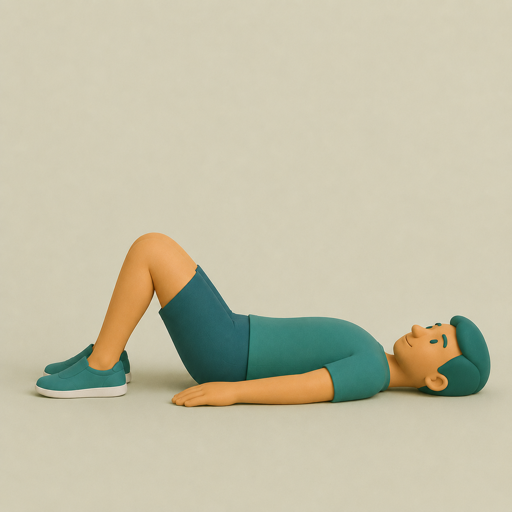 Pelvic tilts — 10 slow reps. The warm-up and the password: a tiny rock of the pelvis that wakes the deepest layer of the corset before you ask anything harder of it.
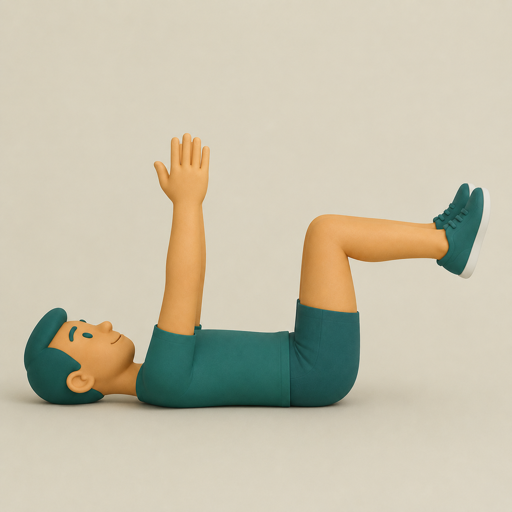 Dead bug — 8 to 10 reps per side. Lower one arm and the opposite leg while your lower back stays pressed into the floor. If the back peels up, the range was too big — a smaller version counts just the same.
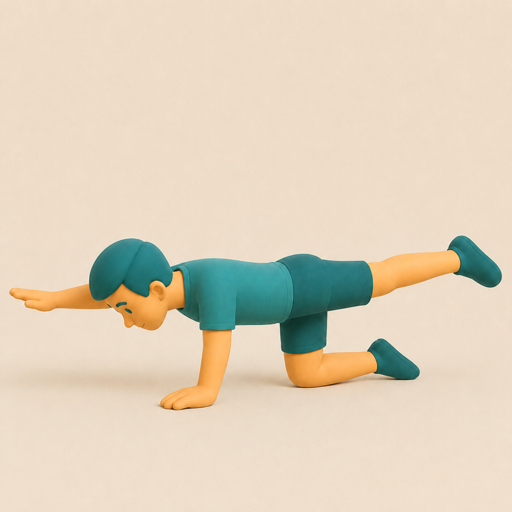 Bird dog — 8 to 10 reps per side, holding 3 to 5 seconds. Opposite arm and leg reach while the spine stays quiet and level, like a tray of drinks is balanced on your hips. Slow is the entire point.
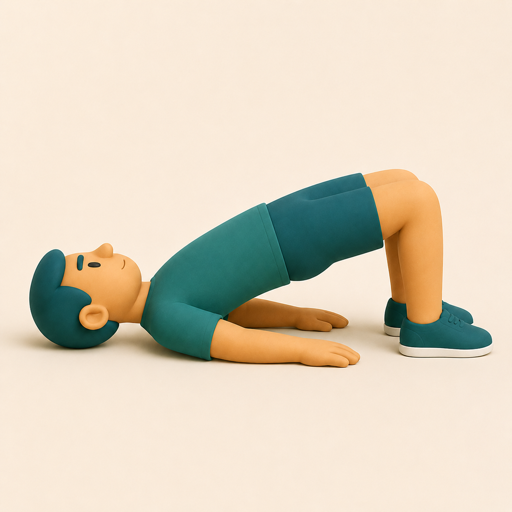 Glute bridge — 12 to 15 reps. Strong glutes carry load the lower back would otherwise absorb; the bridge builds them while the spine rests supported between your shoulders and feet.
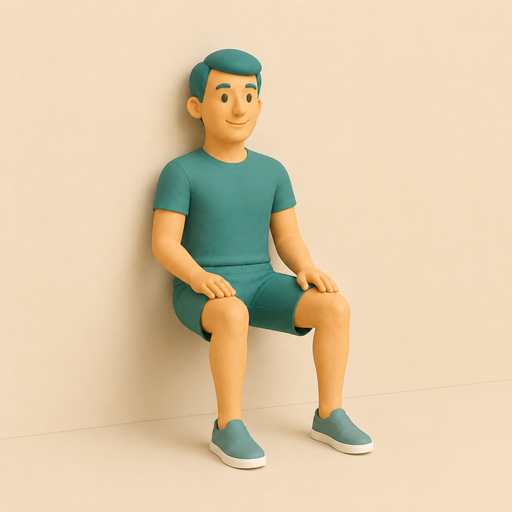 Wall sit — 20 to 30 seconds to finish. An optional standing hold that builds leg and trunk endurance with the wall backing up your spine the whole time.
Running it on sore days
At these doses, every other day is plenty to begin with — muscles get stronger between sessions, not during them — and most days becomes an option once the routine feels easy. What matters more than frequency is the pattern across weeks: small amounts, repeated, are how a back rebuilds its trust in effort.
On a genuinely bad day, shrink rather than skip. Pelvic tilts alone, done slowly, keep the habit alive and remind an irritated back that gentle effort is safe; the rest of the list will still be there tomorrow. Strength work also pairs naturally with mobility — a few minutes of easy stretching like the morning stiffness routine before or after makes both halves feel better, and the lower-back relief hub gathers all of it in one place.
If you would rather not decide any of this yourself, the 60-second check-in builds a daily ten-minute plan around your specific back — which moves, in what order, at what pace — and guides you through one short session a day, with the first session free.
When core work should wait for a professional
Some backs need medical eyes before they need exercises. See a healthcare professional promptly if your pain follows an accident or fall, runs down a leg, or comes with numbness, tingling, weakness, fever, or unexplained weight loss — and likewise if it keeps worsening over weeks or reliably wakes you at night. The NHS back pain guidance lists the same warning signs.
This guide is educational information, not medical advice. When in doubt, check with your doctor before starting any exercise program.
Reading helps — a plan does the deciding for you: which moves, in what order, for your back.
Start my 60-second check-inFirst session free · no card needed
Educational information, not medical advice — consult a licensed healthcare provider, and check with your doctor before starting any exercise program.