Tech Neck and a Tight Upper Back: Gentle Moves for Screen Days
The ache has a nickname now — tech neck — which tells you how many of us share it. Hours of looking at screens draw the head forward and down, the shoulders follow, and by evening the bill arrives: a stiff neck, a knot between the shoulder blades you can never quite reach, and shoulders that have crept up somewhere near the ears.
This guide walks through what all that looking actually asks of your neck and upper back, the signs your screen habits are part of the story, and a ten-minute routine of six gentle moves that may help undo the day's forward drift — most of them doable in the same chair the day happened in.
What screens ask of a neck
A head is heavy — somewhere around the weight of a bowling ball — and it balances beautifully when it sits stacked over the spine, because the bones do the holding. Let it drift forward toward a screen, though, and the muscles along the back of the neck and upper back inherit the job, holding that weight against gravity minute after minute. The further forward the drift, the harder they work. Nothing about any single moment of it is dramatic; it is the hours that add up.
The shoulders join in quietly. As the head goes forward, the upper back rounds, the chest shortens, and the shoulder blades slide apart — which leaves the muscles between them held long and switched on at the same time. That combination is exactly what breeds the familiar burning spot beside the shoulder blade that rubbing only quiets for a minute.
The encouraging part: this is a habit, not damage. Muscles that spend the day held in one shape tend to respond well to being moved through their range and gently strengthened — the same principle behind everything else on this site, pointed this time at the top of the spine instead of the bottom.
Signs the screen is part of the story
Neck and upper-back ache has plenty of possible sources, and symptoms alone cannot sort them. But if several of these feel familiar, your screen hours have earned a place in the routine below:
- The stiffness builds over the workday and is loudest by late afternoon.
- A weekend away from the desk feels noticeably better within a day or two.
- The sore spot lives between the shoulder blades or in the slope between neck and shoulder.
- Long screen days end with a dull ache creeping up from the base of the skull.
- Caught in a mirror mid-afternoon, your ear sits visibly ahead of your shoulder.
The 10-minute screen-day reset
Do these in order, once or twice a day — mid-morning and mid-afternoon are the natural slots, right when the drift has had a few hours to build. Keep every range comfortable and unhurried: this is a reset between work, not a workout, and nothing here should need bracing for.
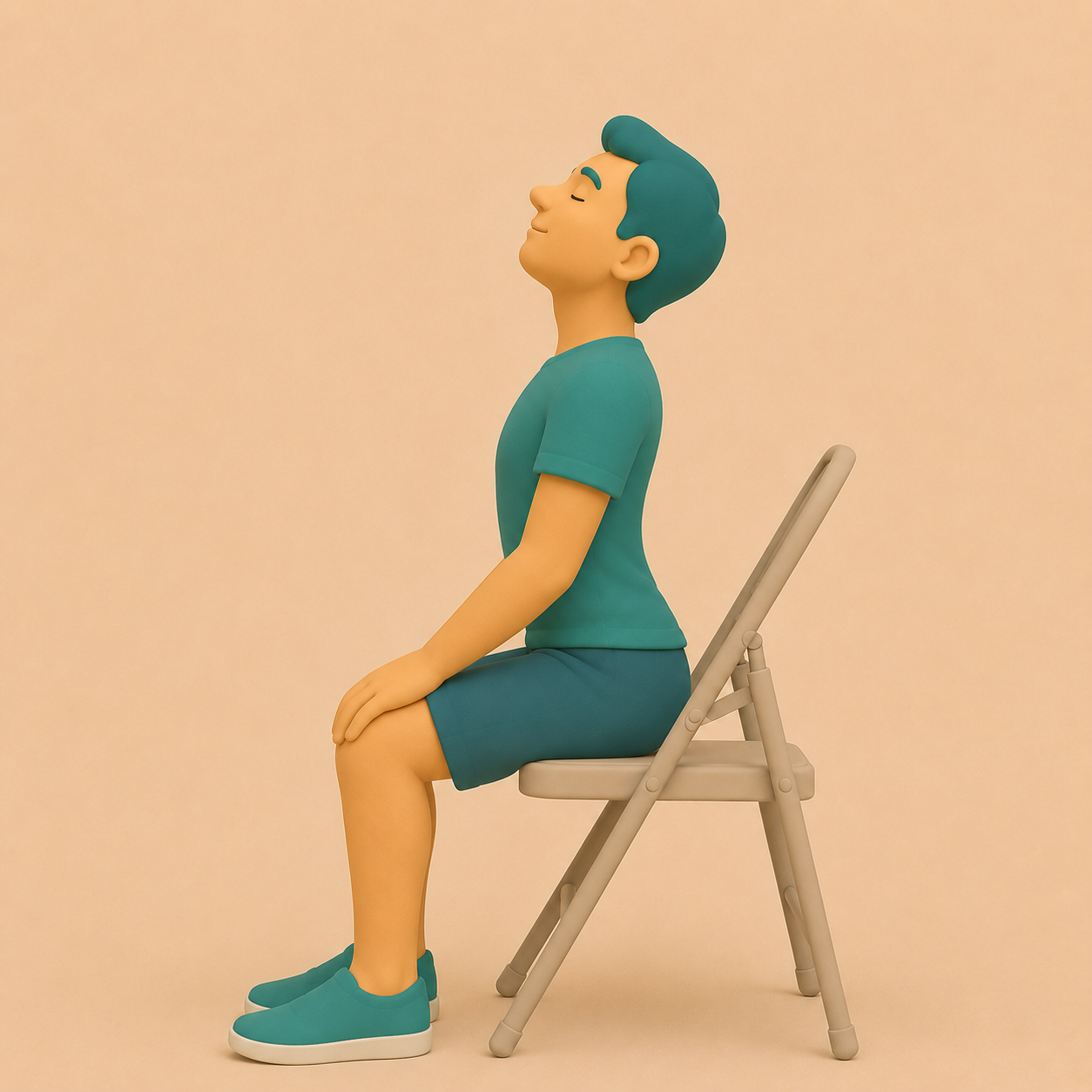 Seated Cat-Cow — 8 slow breath cycles. A wave through the whole spine to warm things up without leaving the chair: chest lifts on the inhale, spine rounds on the exhale. Let the breath set the pace.
 Seated chin-to-chest — 20 to 30 seconds. Let the chin drop under just its own weight and feel the back of the neck lengthen. No pulling with the hands — gravity is the right dose here.
 Upper-trap stretch — 20 to 30 seconds per side. The slope between neck and shoulder does the heaviest holding on a screen day. Ear eases toward shoulder; the resting hand adds only its own weight.
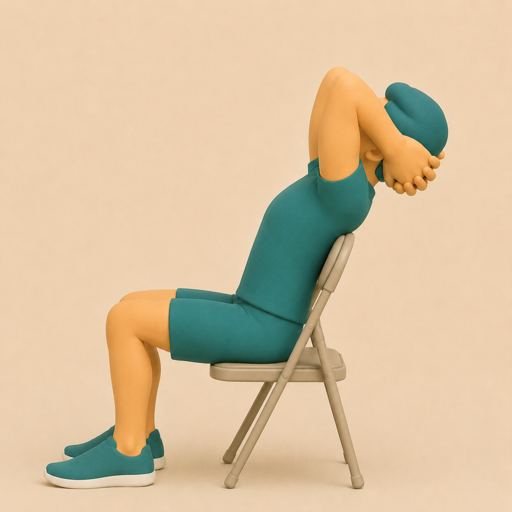 Thoracic extension over the chair back — 5 to 8 gentle arcs. Drape your upper back over the backrest, padding the edge with a folded towel, and bend the mid-back the one way screens never ask it to.
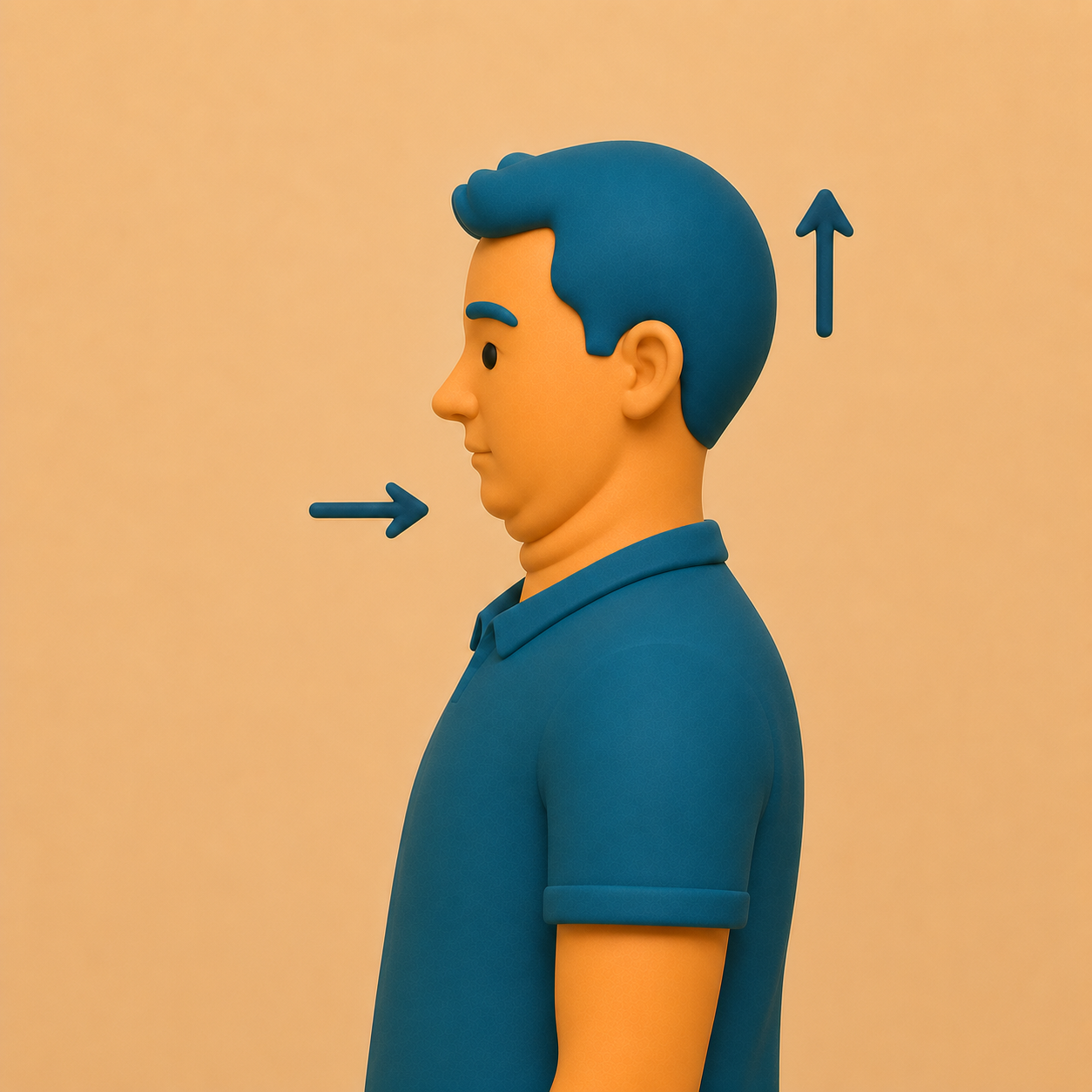 Standing chin tuck — 8 to 10 slow glides. The counter-move to the forward drift: eyes level, chin gliding straight back, head landing over the spine where the bones can hold it again.
 Wall angels — 6 to 8 slow slides. Back against the wall, arms tracing a slow snow angel. Humbling on day one, and exactly the strength the muscles between your shoulder blades have been missing.
Raising the screen, and other quiet wins
The routine undoes; the setup prevents. The single highest-value change is bringing the screen up to eye level — a laptop on a stand or a stack of books, with a separate keyboard — so the head can rest stacked over the spine instead of hanging in front of it. Ten seconds of arranging spares the neck thousands of forward minutes a week, and MedlinePlus's guide to good posture covers the same ground for the rest of the workstation.
Then break up the stillness. No position survives hours of holding, however good it looks in a diagram — necks and upper backs do best when the shape changes often. A move or two every 30 to 45 minutes keeps the drift from setting, and the movement snacks guide is built for exactly that rhythm; on office days, the desk-day moves cover the lower half of the same story.
And let the change take its time. A pattern built over years of screens loosens on a schedule of weeks — most days for two weeks is a fair first trial. If you would rather have it all assembled for you, the 60-second check-in builds a daily ten-minute plan around your specific back and neck — which moves, in what order, at what pace — and guides you through one short session a day, with the first session free.
When neck and upper-back trouble deserve a professional
Some patterns need medical eyes before they need stretches. See a healthcare professional promptly if neck or upper-back pain follows an accident or fall, or comes with pain, numbness, tingling, or weakness running down an arm, fever, unexplained weight loss, or dizziness — and likewise if it keeps worsening over weeks or reliably wakes you at night. A sudden severe headache with a stiff neck deserves urgent attention. The NHS neck pain guidance lists the same warning signs.
This guide is educational information, not medical advice. When in doubt, check with your doctor before starting any exercise program.
Reading helps — a plan does the deciding for you: which moves, in what order, for your back.
Start my 60-second check-inFirst session free · no card needed
Educational information, not medical advice — consult a licensed healthcare provider, and check with your doctor before starting any exercise program.