Tight Hips and Lower-Back Ache: The Connection
The ache shows up in your lower back, so the lower back gets all the attention — the rubbing, the hot water bottle, the careful lowering into chairs. But backs rarely work alone. Sitting just below them are the hips: the body's biggest joints, wrapped in its strongest muscles, and, for most of us, parked in a chair for the better part of every day.
This guide walks through that connection — how stiff hips quietly hand their workload to the lower back, the signs it may be happening to you, and a ten-minute routine of five gentle moves that may help give the work back to the joints built for it.
How the hips hand their work to the back
Think of the pelvis as the platform your spine stands on. The big hip muscles all anchor to it — hip flexors across the front, hamstrings behind, glutes and the deep rotators around the sides — and when they are supple, the platform sits level and the spine stacks comfortably on top. When they stiffen, they start to tug. Shortened hip flexors, for instance, pull the front of the pelvis downward, which nudges the lower back into a deeper arch that its muscles then have to hold, hour after hour.
The second handoff is about movement. Hips are designed for big ranges — walking, squatting, climbing, turning all live there. When that range shrinks, the movement still has to come from somewhere, and the somewhere is usually the lumbar spine: each stride and each bend borrows a few degrees from the lower back instead. It is a tiny loan per repetition, made thousands of times a day.
The encouraging part is that none of this is damage — it is a habit the body drifted into, and habits respond to practice. Muscles that get moved through their range regularly tend to give that range back, which is exactly what the routine below is for.
Signs your hips may be part of the story
None of these prove anything on their own — backs and hips are tangled enough that guessing from symptoms is unreliable. But if a few of the following feel familiar, your hips have earned a place in your routine:
- Your lower back aches after long sitting but eases once you have been up and moving for a while.
- Standing up tall after a long stretch in a chair brings a pulling feeling across the front of the hips.
- A deep, one-sided ache in the buttock that desk days and long drives make louder.
- Hamstrings that feel banjo-string tight when you fold forward, while your back rounds to make up the difference.
- Back ache that arrives toward the end of a long walk or a day on your feet, about when tired hips stop doing their share.
A 10-minute routine to loosen the connection
Do these in order, on a mat or carpet — one kneeling move, then the rest lying down. Move at half the speed you think you should, keep every range comfortable, and let the breath set the pace: a mild stretch that eases as you stay is right, anything sharp means shrink it.
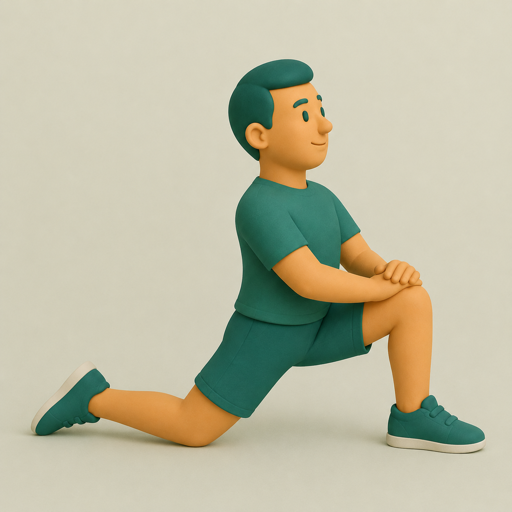 Kneeling hip flexor stretch — 30 seconds per side. The front of the hip spends all day shortened in a chair; this opens it back up. Tuck the pelvis slightly and the stretch lands in the hip without the lower back arching to chase it.
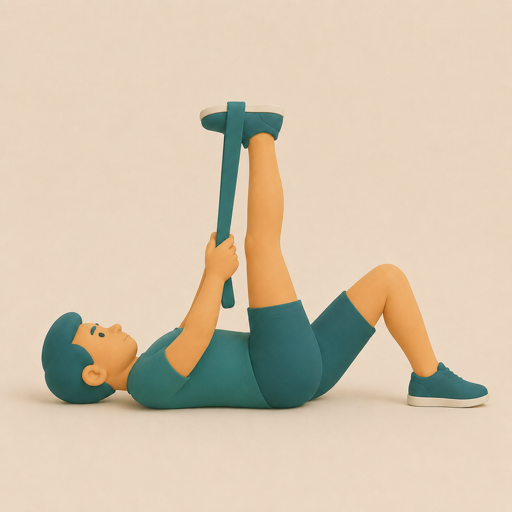 Supine hamstring stretch — 30 seconds per side, with a towel or strap around the foot. Easing the hamstrings lets the pelvis tip freely again instead of dragging the lower back into every forward bend.
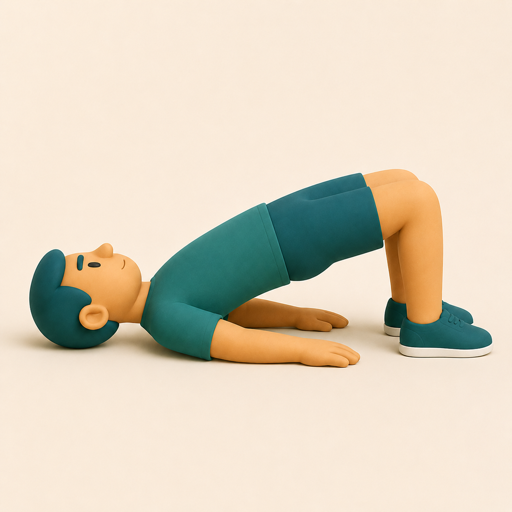 Glute bridge — 12 to 15 slow reps. Flexibility opens the door and strength keeps it open: glutes that do their share carry load the lower back would otherwise absorb.
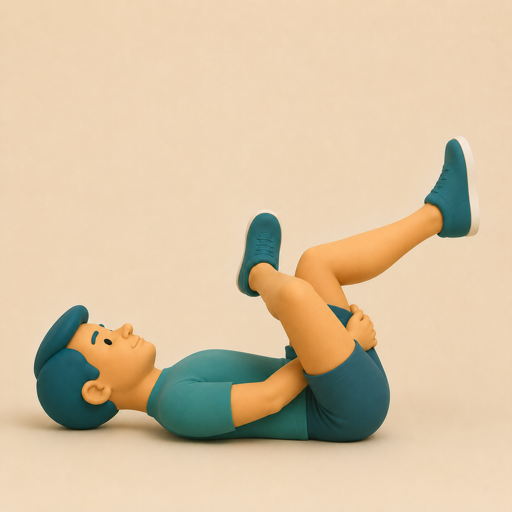 Piriformis stretch — 30 seconds per side, crossed foot flexed. A patient figure-four for the deep buttock muscles that long sitting squeezes; let the thigh ease closer over several breaths rather than pulling it.
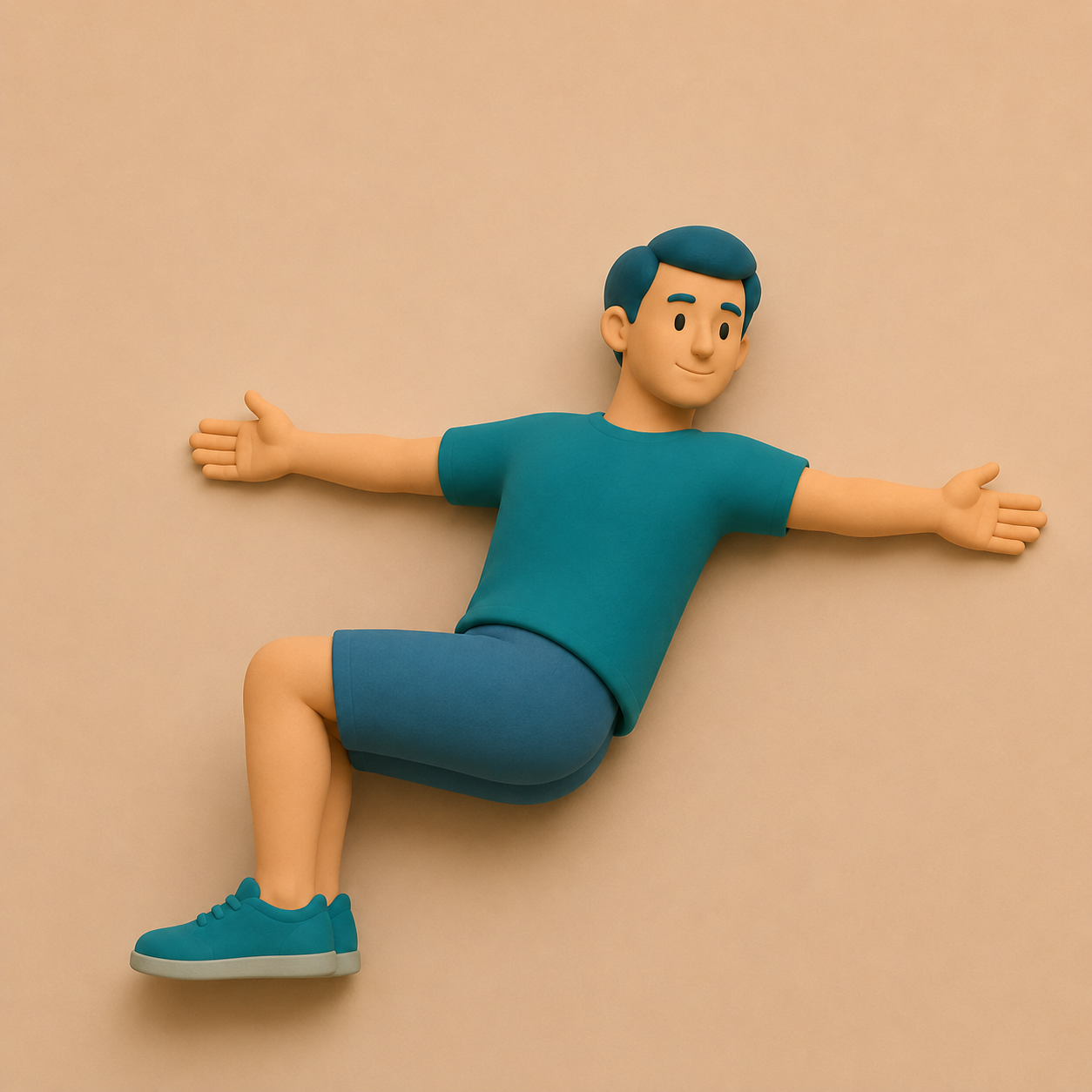 Supine twist — 30 to 45 seconds per side. A quiet finisher that lets hips and lower back settle together — knees dropping lazily to each side, shoulders staying heavy on the floor.
Keeping the hips on your side
The routine works best alongside one boring habit: breaking up stillness. Hips do not stiffen because chairs are evil; they stiffen because they were held in one shape for hours. Standing, strolling to refill the water glass, a stretch at the desk — anything every 30 to 45 minutes keeps the shape from setting, and the desk-day moves pair naturally with this routine on work days.
Then give it time. Hips that took years to stiffen loosen on a schedule of weeks, not days — most days for two weeks is a fair trial, and gentle, consistent movement is among the best-supported self-care there is for common back discomfort; MedlinePlus's back pain overview keeps exercise near the top of its list. Everything on this site for the area, guides and moves alike, lives in the lower-back relief hub.
And if you would rather not assemble the pieces yourself, the 60-second check-in on backpain.ai builds a daily ten-minute plan around your specific back and hips — which moves, in what order, at what pace — and guides you through one short session a day, with the first session free.
When hip and back trouble deserve a professional
Some patterns need medical eyes before they need stretches. See a healthcare professional promptly if your pain follows a fall or accident, runs below the knee, or comes with numbness, tingling, weakness, fever, or unexplained weight loss — and likewise if it keeps worsening over weeks, reliably wakes you at night, or if a hip is painful to put weight on. The NHS back pain guidance lists the same warning signs.
This guide is educational information, not medical advice. When in doubt, check with your doctor before starting any exercise program.
Reading helps — a plan does the deciding for you: which moves, in what order, for your back.
Start my 60-second check-inFirst session free · no card needed
Educational information, not medical advice — consult a licensed healthcare provider, and check with your doctor before starting any exercise program.