Walking and Back Pain: How Much, How Gentle
Back pain has a way of making movement feel dangerous. The instinct is to rest, to guard, to wait for the ache to settle before doing anything that might disturb it — and for a sharp new injury, a day or two of that instinct is reasonable. But for the ordinary, nagging soreness most people live with, walking is usually one of the safest and most useful things you can do, not something to wait out.
This guide covers why walking tends to help rather than hurt, how to build it up without overdoing it, and a short routine to bookend the walk itself.
Why walking tends to help
Spinal discs don't have their own blood supply — they get nutrients the slow way, through fluid squeezed in and out as you move. Sitting still for hours starves that exchange; walking restores it, one step at a time. It is also one of the few activities that loads the spine while keeping it in a fairly neutral, upright position, unlike the flexed posture that most backs spend their day folded into at a desk or in a car.
There is a psychological piece too. A back that has been guarded and protected for a while can grow sensitized — reading ordinary movement as a threat, which tightens the surrounding muscles further and makes everything feel stiffer than it really is. Walking, done at a pace that stays comfortable, is a gentle way of teaching a wary back that movement is safe again.
How much, and how to build it up
There is no single correct distance — the right amount is whatever leaves you feeling the same or better the next morning, not worse. A useful starting point for a back that has been guarded for a while:
- Begin with 10 minutes at an easy, conversational pace, most days of the week.
- If the next morning feels the same or better, add 2 to 3 minutes every few days.
- Let 20 to 30 minutes most days be the target you build toward, not the starting line.
- A short walk today beats an ambitious one that leaves you sore and hesitant tomorrow.
Walking tall
How you carry yourself matters as much as the distance. Slouched forward with the chin poking ahead, the lower back often ends up doing work meant for the whole trunk. Standing tall — chin gently drawn back rather than jutting forward, shoulders relaxed rather than hunched toward the ears, arms swinging loosely — spreads the load the way walking is meant to.
None of this needs to be rigid or effortful. A momentary check every few minutes — chin back, shoulders down, are you as tall as when you set off — is usually enough to catch the slow slouch that creeps in on longer walks.
A short routine for before and after
These moves bookend a walk well: a minute or two of posture and extension before you head out, the same afterward, with a touch of hip and glute work on days you have a little longer.
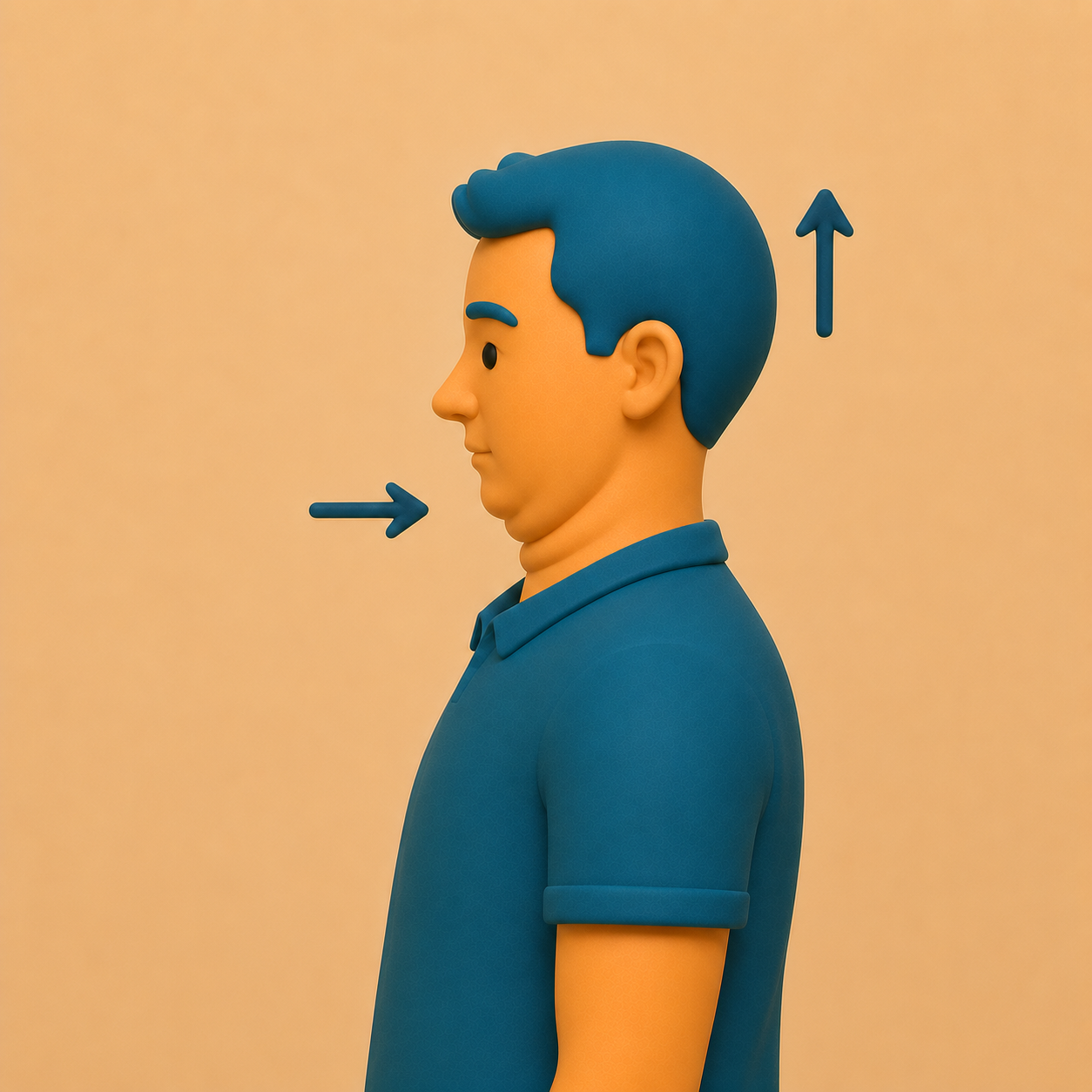 Standing chin tuck — 8 to 10 reps. Wakes the deep neck muscles that hold your head over your spine instead of out in front of it; a good one right before you set off.
 Standing back extension — 10 reps. A gentle arch the opposite way from all the forward bending a walk, or the drive to start one, can leave behind.
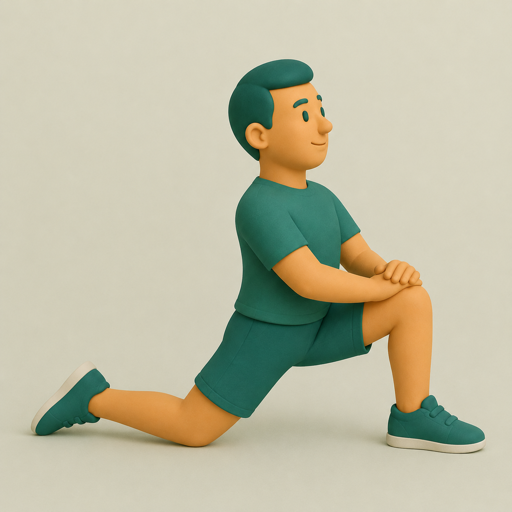 Kneeling hip flexor stretch — 30 seconds per side. Hips do more of the work in a stride than people expect; this returns the front of the hip to full length afterward.
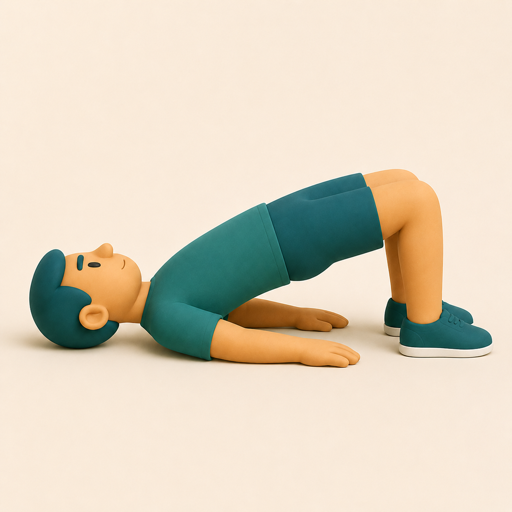 Glute bridge — 12 to 15 reps. Strong glutes carry more of each stride, which is exactly the load-sharing a sore back benefits from.
Keeping it going
Consistency counts for more than any single walk. A short daily habit builds tolerance in a way that one long outing never will — pairing it with the hip routine in this guide or the rest of the lower-back relief hub covers the sitting hours between walks too.
Gentle, regular movement remains one of the best-supported forms of self-care for ordinary back pain; MedlinePlus's back pain overview keeps staying active near the top of its guidance. If you would rather have all of this built around your specific back, the 60-second check-in on backpain.ai turns it into a daily plan, with the first session free.
When walking isn't the answer
Walking is safe for the overwhelming majority of ordinary back pain, but see a healthcare professional promptly if your pain follows a fall or accident, radiates below the knee, or comes with numbness, tingling, weakness, fever, or unexplained weight loss — and also if walking itself reliably makes the pain sharply worse rather than easing it, or if pain wakes you at night. The NHS back pain guidance lists the same warning signs.
This guide is educational information, not medical advice. When in doubt, check with your doctor before starting any exercise program.
Reading helps — a plan does the deciding for you: which moves, in what order, for your back.
Start my 60-second check-inFirst session free · no card needed
Educational information, not medical advice — consult a licensed healthcare provider, and check with your doctor before starting any exercise program.